

The AI race has peaked in 2026. Comparing ChatGPT and Gemini now means looking beyond marketing to see which AI assistant offers better performance, integration, and value. Both OpenAI and Google DeepMind have pushed their platforms well past simple chatbots, turning these AI tools into autonomous systems capable of handling multi-app workflows on their own. Picking the right one really comes down to how each performs on real workloads rather than headline claims.
Where the Market Stands in 2026
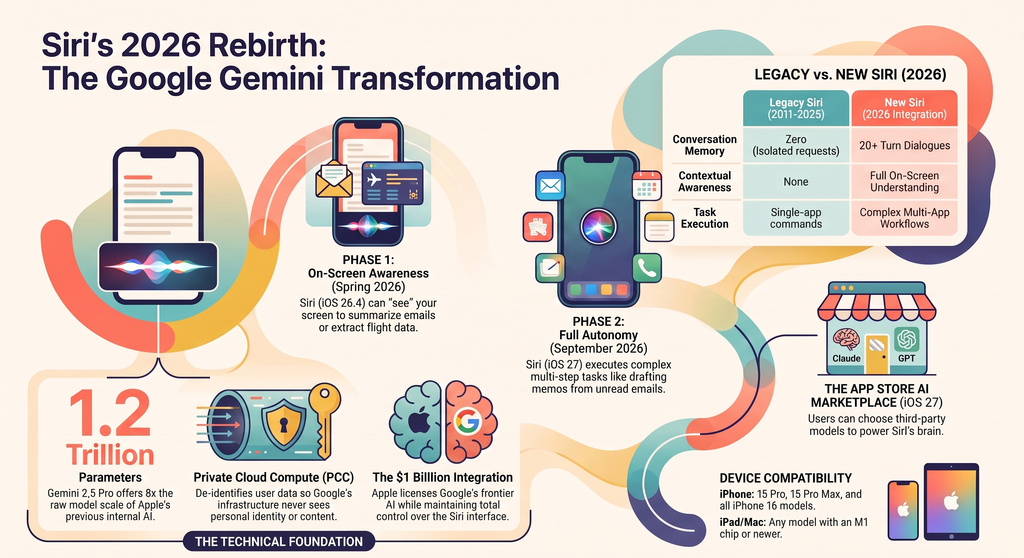
This year has been defined by rapid updates, falling prices, and deeper hardware integration across the AI tools sector. OpenAI’s GPT-5 lineup, including GPT-5.2, GPT-5.5, and GPT-5.6 Sol, now competes directly against Google’s Gemini 3 series, led by Gemini 3.1 Pro and Gemini 3.5 Flash. Apple’s decision to sign a $1 billion annual deal putting Gemini 2.5 Pro behind Siri across 2 billion active devices was one of the year’s bigger shifts, enabling screen awareness through Apple’s Private Cloud Compute infrastructure.
API pricing across these AI tools has also dropped roughly 80% year over year. General intelligence scores between the two remain fairly close, but clear specializations have emerged, and which platform makes sense really depends on workflow needs, data security requirements, and existing habits.
Reasoning, Writing, and Coding Performance

Benchmark results show real differences depending on the task.
- On GPQA Diamond, a scientific reasoning benchmark, Gemini 3.1 Pro scores 94.3%, ahead of GPT-5.4’s 92.8%
- On ARC-AGI-2, an abstract reasoning test, GPT-5.5 scores 83.3% against Gemini 3.5 Flash’s 72.1%
- On Terminal-Bench 2.1, covering shell execution, GPT-5.6 Sol hits 88.8% accuracy compared with 76.2% for Gemini 3.5 Flash
- On SWE-Bench Pro, GPT-5.6 Sol scores 64.6% versus 55.1% for Gemini
Gemini does claw back ground with a context window reaching 2 million tokens through its API, letting developers work through entire codebases without hitting truncation limits. On writing, GPT models tend to produce cleaner prose with roughly 33% fewer hallucinations, while Gemini holds an edge in structured research summaries backed by web citations.
Multimodal Capability and Voice Features

Multimodal design is genuinely one of the bigger divides between these two AI tools. Gemini was built from the ground up to handle text, images, audio, video, and code within one architecture, which shows up in strong image analysis, video frame parsing, and native media generation. Video comes through Veo 3.1 with synced audio, and music generation runs on Lyria 3.
ChatGPT takes a different route, handling multimodal tasks through separate pipelines rather than one unified system. Without Sora built in, it currently has no native video generation and leans on GPT’s image models for visual output instead.
Voice performs well on both sides. ChatGPT runs on GPT-Live, a full-duplex system that can listen and speak simultaneously, handing off harder queries to background models as needed. Gemini Live works on a turn-based structure but adds live camera and screen sharing on mobile, useful for real-time visual analysis.
Pricing Across Consumer Plans and Developer APIs
At the consumer level, ChatGPT Plus runs $20 a month and includes flagship model access, memory that carries across sessions, and Agent Mode. Google AI Pro comes in slightly cheaper at $19.99 a month, bundling Gemini 3.1 Pro, Deep Research tools, Workspace integration, and 2TB of cloud storage.
Developers see a bigger gap. Gemini 3.5 Flash charges $1.50 per million input tokens and $9.00 per million output tokens, while GPT-5.6 Sol runs $5.00 and $30.00, respectively, making Gemini roughly 70% cheaper for high-volume processing.
Ecosystem Fit and Security
Gemini functions as a native layer across Google Workspace, pulling context from Gmail, summarizing Drive files, and drafting directly in Docs, and it’s also the default assistant across Android devices. Enterprise privacy relies on data isolation that keeps queries out of model training, and Apple’s Siri integration uses Private Cloud Compute to de-identify requests before processing.
ChatGPT operates more as a standalone platform, with cross-session memory that adapts to a user’s style over time. ChatGPT Enterprise connects into Microsoft 365, Slack, and other tools through Model Context Protocol integrations, making it a reasonable fit for mixed vendor environments.
Strengths and Trade-Offs at a Glance
ChatGPT tends to lead on:
- Autonomous shell execution and coding accuracy
- Cleaner, more polished prose
- Persistent memory across sessions
- Full-duplex voice conversation
ChatGPT falls short on:
- Higher API pricing
- Smaller base context window
- No native video generation
- No native Google Workspace integration
Gemini tends to lead on:
- Deep Workspace and Android integration
- Roughly 70% lower API costs
- Context windows up to 2 million tokens
- Native video, audio, and live camera sharing
Gemini falls short on:
- Precision on multi-file terminal code refactoring
- Minor formatting slips on complex JSON schemas
- Lower scores on abstract reasoning benchmarks
Which AI Tools Actually Make Sense for You
Choosing between these two AI tools really comes down to what you’re actually trying to do and what systems you’re already running. ChatGPT makes more sense for teams focused on serious software development, complex logical reasoning, and workflows that benefit from an assistant learning individual style over time, which is why developers and data analysts tend to lean toward it.
Gemini fits better for organizations already living inside Google Workspace, teams running high-volume API workloads that need large context windows, and anyone doing regular multimodal work involving video, audio, or live camera input. Its lower cost per token and tight document integration make it a strong choice for administrative and content-heavy tasks. It’s worth noting that plenty of organizations in 2026 aren’t picking just one. A hybrid approach, running both platforms and assigning tasks based on what each one does best, has become fairly common, and for many teams, it’s the more practical path forward than committing fully to either side.
Read More