
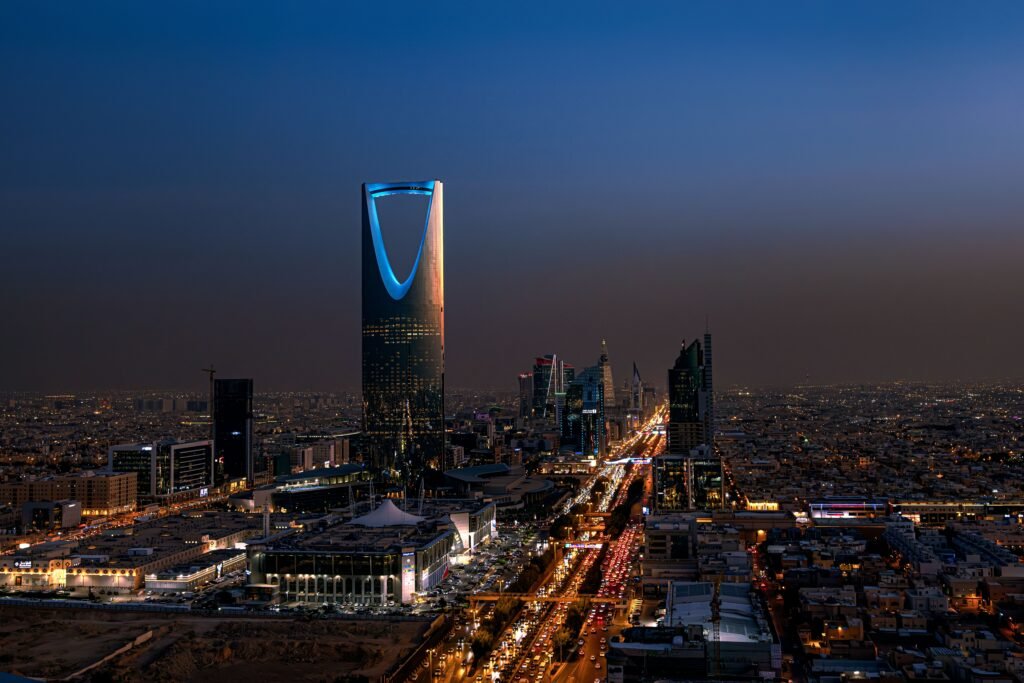
Riyadh is quickly turning into one of the region’s most important economic hubs, now accounting for 41.5% of the entire Kingdom’s real estate market value. Heading into 2027, the market is shaped by reforms, new infrastructure, and a steady flow of foreign capital. Anyone browsing apartments for sale in Riyadh right now is looking at a city in transition, where corporate relocations, population growth, and updated ownership laws are all recalibrating property values at once. Early price surges have started giving way to something steadier, as regulation and a growing pipeline of new stock bring more balance to the market.
Population Growth and Job Creation Behind the Demand
Riyadh’s population is on track to hit 9.6 million by 2030, and that growth alone is doing a lot of the heavy lifting behind current demand.
- Nearly half of all new jobs created in Saudi Arabia are landing in the capital
- Job growth is pushing up demand for both housing and commercial space
- A government mandate now requires foreign corporations to set up regional headquarters in Riyadh
Corporate relocations fueling office and housing demand
- Over 700 multinational companies have secured regional headquarters licenses, beating official targets
- Foreign investment licenses grew nearly 20% year on year
- Executive relocations are feeding directly into demand for prime residential developments and modern office space
Regulatory Reforms Opening the Door to Foreign Buyers
One of the biggest shifts in the market is the updated legal framework around foreign real estate ownership.
Foreign ownership zones
Through official portals run by the Real Estate General Authority, non-Saudi buyers can now acquire ownership and in-rem rights in designated zones, including:
- King Abdullah Financial District
- Diriyah Gate
- New Murabba
- SEDRA
- Several transit corridors across the city
It’s a rules-based system that gives international buyers a genuinely transparent path into the market.
Rent freeze and supply programs
- A five-year rent freeze was introduced in late 2025 to keep inflation in check
- Existing leases are locked at late 2025 levels, giving tenants predictability
- New contracts on fresh construction are still set at market rates
- Government housing programs such as Sakani, Tawazon, and National Housing Company developments continue adding supply
- The Tawazon land program caps serviced plot prices at SAR 1,500 per square meter, easing land cost pressure
What Prices Look Like Across Riyadh Right Now
- Citywide apartment prices average SAR 6,245 per square meter
- Villa values average SAR 5,640 per square meter
- 16,000 residential units were delivered in 2025
- Another 57,000 to 63,000 units are due through 2027
- Total residential stock is expected to reach 3.3 million units by 2030
The commercial picture
- Grade A office rents sit between SAR 2,604 and SAR 2,770 per square meter a year
- Occupancy is running at 95% to 99%
- Prime towers in the King Abdullah Financial District go for as much as SAR 4,000 per square meter
- Total office stock is expected to grow from 6 million to over 10.6 million square meters by 2032
Where the Best Value Sits, District by District
Pricing varies a lot depending on where you look, and that matters for anyone comparing apartments for sale in Riyadh across different submarkets.
- North Riyadh: the highest price tier, with Al Malqa, Hittin, and Al Nakheel trading between SAR 9,000 and SAR 16,000 per square meter
- Mid-tier northern districts: Al Narjis, Al Qirawan, and Al Arid sit between SAR 6,200 and SAR 8,500 per square meter
- Eastern districts: Al Rimal and Al Munsiyah offer entry points from SAR 5,000 to SAR 7,500 per square meter, with villas, townhouses, and apartments backed by solid local amenities
- Southern districts: the most affordable option, ranging from SAR 3,200 to SAR 5,500 per square meter
Infrastructure Driving Long-Term Value
Transport connectivity is one of the biggest factors behind rising property values and rental demand across the city.
- The metro rollout and ongoing highway upgrades are reshaping how people commute between business districts
- Properties near rapid transit stations tend to command rental premiums
- Transit-linked properties also show steadier occupancy over time
Expo 2030 as a growth anchor
- Spans 6.5 square kilometers along King Salman Road in northern Riyadh
- Represents a SAR 31.2 billion investment
- Adjacent northern districts are already seeing property values lift as infrastructure progresses
Weighing the Advantages for Buyers and Investors
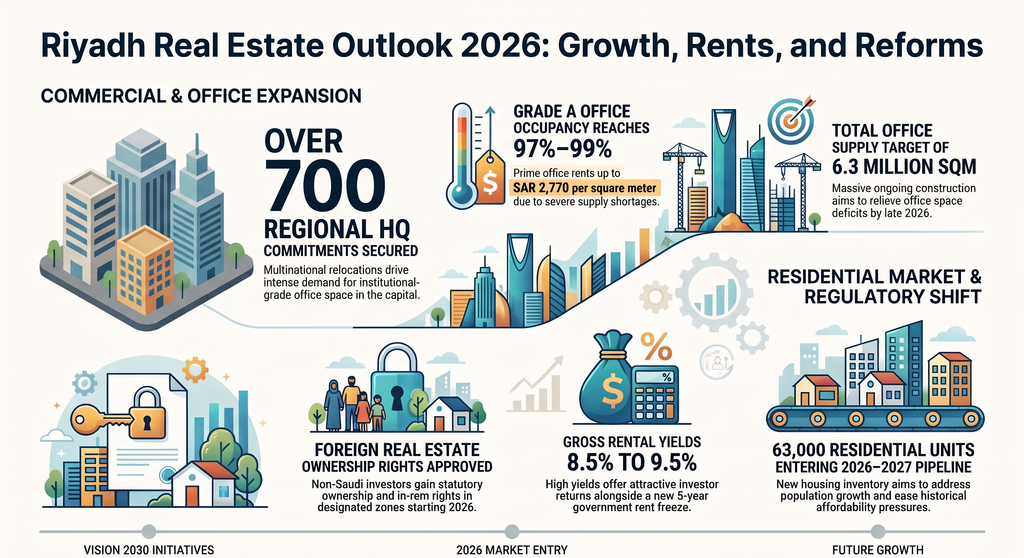
- High rental yields: gross yields between 7% and 9.5% outperform many mature global markets
- Regulatory clarity: foreign ownership rules in designated zones give international buyers a clear framework to work within
- Infrastructure access: direct metro and highway connections support both tenant demand and long-term value
- Rent stability: the five-year freeze limits sharp annual increases on existing leases, favoring long-term holds
- Supply balance: over 60,000 new residential units arriving through 2027 should keep supply and demand in check
Yield snapshot
- Gross residential yields average 8.89% citywide
- Prime submarkets reach 7% to 9.5%
- Occupancy holds above 90% in most areas
- New off-plan properties can still be priced at market rates, even under the rent freeze
Looking Ahead
Riyadh’s property market is moving toward a more mature, balanced phase of growth. Foreign ownership rights, infrastructure delivery, and corporate relocations are aligning in a way that shifts the market from speculation toward genuine, value-driven activity. For anyone weighing up apartments for sale in Riyadh over the next few years, the smartest approach is focusing on designated foreign ownership zones, transit-connected communities, and new residential developments tied to government growth corridors. That’s where the city’s momentum as a regional economic center is likely to show up first.
Read More